CO2 Laser Resurfacing: Evaluating Benefits, Limitations, and Decision Factors
Selecting the optimal skin rejuvenation treatment requires balancing therapeutic efficacy, anatomical suitability, recovery tolerance, and financial investment. Fractional CO2 laser resurfacing represents a premier benchmark for structural dermal renewal, delivering intense collagen stimulation and deep skin texture refinement. However, because CO2 laser energy is micro-ablative, it involves a dedicated post-procedure healing window that differs significantly from non-ablative energy treatments. At Din Style Aesthetics in Miami Lakes, we believe informed patients achieve the most satisfying long-term outcomes. This guide offers an objective comparative breakdown of CO2 laser resurfacing alongside alternative modalities like non-ablative photothermal renewal, Sofwave ultrasound tightening, and radiofrequency micro-channeling. Patients comparing options should understand that each technology occupies a distinct place in the aesthetic spectrum; the goal of the consultation is to identify which mechanism—or which sequenced combination—best addresses the patient's specific concerns, skin type, and recovery tolerance.
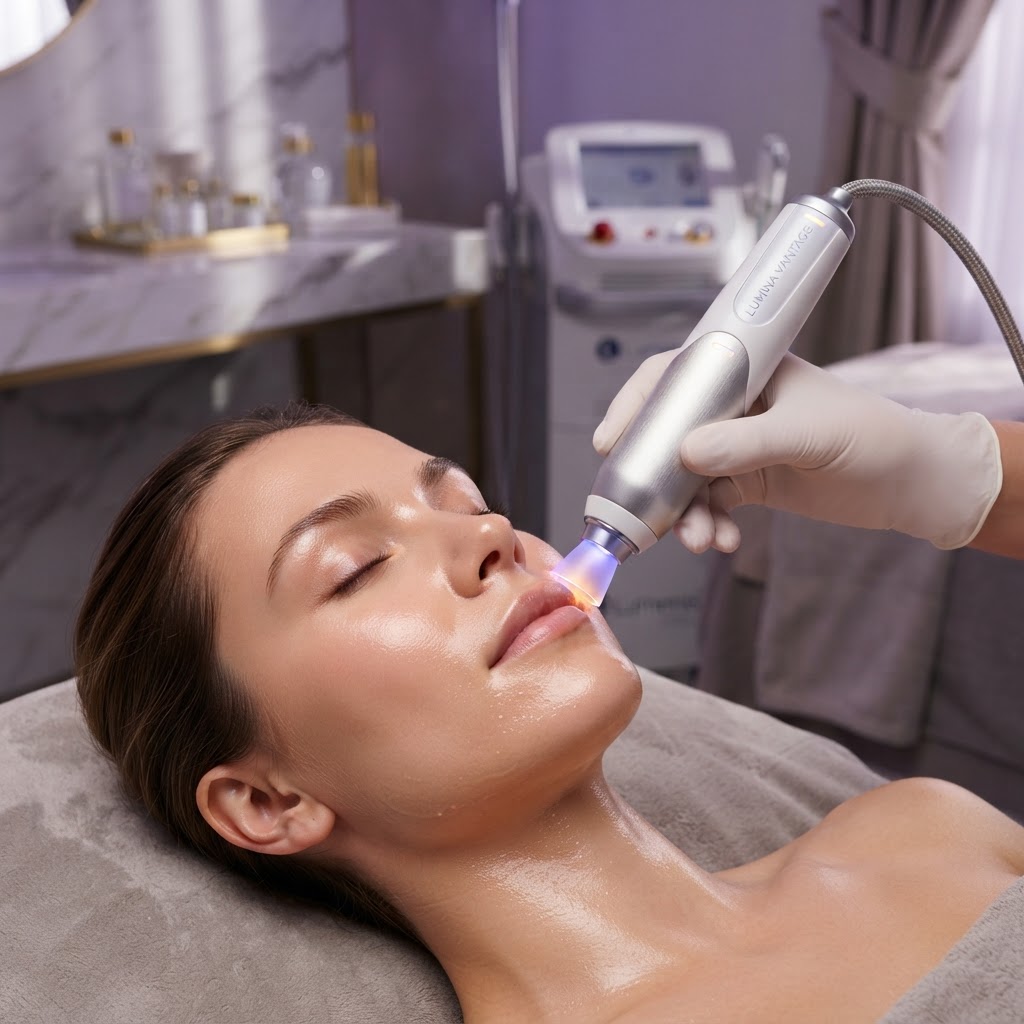
Comparing Treatment Depth: Ablative Versus Non-Ablative Technologies
The primary distinction between aesthetic energy devices lies in whether they disrupt the epidermal surface (ablative) or leave the stratum corneum completely intact (non-ablative). Fractional CO2 laser is a micro-ablative modality; it vaporizes microscopic columns of both epidermal cells and dermal matrix tissue. This physical removal of damaged tissue triggers rapid re-epithelialization while creating direct channels for deep thermal heat transfer. In contrast, non-ablative lasers and IPL systems (such as Stellar M22) pass light energy through intact epidermis to heat target dermal chromophores without removing surface tissue. While non-ablative treatments offer near-zero downtime and lower recovery requirements, they generally require multiple sequential sessions (3 to 6 treatments) to achieve textural improvements that a single fractional CO2 procedure can accomplish. During your Miami Lakes evaluation, we weigh treatment speed against recovery tolerance to match your personal preferences. This comparison is not about one technology being universally superior; it is about matching mechanism to concern, and matching intensity to the patient's willingness and ability to recover.
Fractional CO2 Laser Versus RF Microneedling and Ultrasound (Sofwave)
Modern aesthetic practices offer several energy-based platforms for dermal firming and texture improvement, each utilizing distinct biophysical mechanisms. Fractional CO2 laser utilizes light energy at 10,600 nm for superficial resurfacing paired with deep dermal collagen contraction. Radiofrequency (RF) microneedling delivers thermal energy via mechanical needles inserted into the dermis, bypassing epidermal chromophores and making it exceptionally safe for darker skin types. Sofwave utilizes Synchronous Ultrasound Parallel Beam (SUPERB) technology to heat mid-dermal tissue precisely at 1.5 mm depth without breaking the skin surface, making it a strong option for targeted submental and neck tissue lifting. While Sofwave excels at structural lifting and RF microneedling excels at dermal thickening, fractional CO2 laser remains a leading modality for surface texture refinement, fine-line erasure, solar dyschromia smoothing, and shallow-to-medium scar ablation. These devices are complementary rather than competitive; a comprehensive aesthetic plan may sequence several of them to address different layers of concern over time. Patients interested in how these technologies compare are encouraged to review the dedicated pages for each advanced treatment and bring specific questions to their consultation.
Key Benefits of Fractional CO2 Resurfacing
The clinical popularity of fractional CO2 laser resurfacing is supported by its impressive spectrum of documented benefits. First, it offers single-session efficacy for severe textural roughness, actinic damage, and stubborn perioral lip rhytids. Second, fractional ablation stimulates long-term neocollagenesis and elastic fiber reorganization that continues to evolve for 6 months post-procedure, yielding durable structural improvements. Third, because modern scanners deliver energy in computerized fractional matrices, thermal damage is strictly controlled, permitting custom tuning of coverage density (typically 5% to 25% of treatment area) to optimize safety and accelerate re-epithelialization. Finally, CO2 resurfacing homogenizes epidermal pigmentation while simultaneously thickening the underlying dermal collagen bed, producing a clearer, firmer, and more luminous complexion. For patients whose primary concern is surface quality—tone uniformity, pore appearance, and fine-line depth—few modalities match the degree of improvement achievable in a single ablative session. The benefits accrue not only from the immediate thermal effect but also from the sustained remodeling that unfolds over the months that follow.
Clinical Limitations and Tradeoffs to Consider
Despite its extraordinary efficacy, CO2 laser resurfacing is not appropriate for every patient or concern. A realistic assessment of limitations is vital during consultation. The primary tradeoff is mandatory healing downtime: patients experience moderate erythema, edema, bronzing, and skin shedding for 5 to 7 days post-procedure. Second, post-laser erythema (pinkness) can persist for several weeks as newly formed skin matures. Third, patients with dark skin phototypes (Fitzpatrick IV through VI) face a higher baseline risk of post-inflammatory hyperpigmentation (PIH) or hypopigmentation if parameters are not meticulously modified. Fourth, CO2 laser resurfacing rejuvenates skin surface and dermal quality but does not reposition sagging deep SMAS muscle layers or replace lost midface fat pads—concerns better addressed through non-surgical lifting technologies like TriLift, Sofwave, or targeted dermal injectables. Patients should weigh these tradeoffs honestly during the consultation. A treatment that is clinically powerful is not automatically the right choice if its recovery demands are incompatible with the patient's life, or if its mechanism does not address the patient's primary concern. The consultation exists precisely to surface these tradeoffs and align the plan with the patient's priorities.
Decision Matrix: Selecting Your Pathway at Din Style Aesthetics
At Din Style Aesthetics in Miami Lakes, we employ a clear decision framework to align your aesthetic priorities with the appropriate technology. When evaluating your skin, we analyze three primary variables: target depth (epidermal surface vs. reticular dermis vs. muscle), severity of structural damage (mild surface dullness vs. deep pitted scarring), and acceptable downtime (0 days vs. 3 days vs. 7 days). If your goal is deep textural overhaul and you have 5 to 7 days for recovery, CO2 laser resurfacing is usually the preferred pathway. If your primary goal is tightening sagging jawline tissue without skin peeling, Sofwave is a strong option. If you seek tone clarification with minimal downtime, Stellar M22 IPL may be recommended. During your private consultation, we formulate a tailored roadmap that may sequence these advanced technologies over time for synergistic results. The decision is guided by the specific anatomy being treated, the patient's recovery tolerance, and the realistic degree of improvement each modality can deliver for that concern. Patients leave the consultation with a clear, written plan and an honest understanding of what to expect at each stage.
Integrating CO2 Resurfacing Into a Broader Aesthetic Plan
Many patients benefit from a sequenced aesthetic plan that combines complementary technologies rather than relying on a single modality. For example, a patient concerned with both deep acne scarring and early jawline laxity might first address structural lifting with Sofwave, then schedule fractional CO2 resurfacing several weeks later to refine the surface texture of the scarred areas. Others may pair resurfacing with injectable treatments that restore midface volume, allowing the newly smoothed surface to sit over a better-supported foundation. The sequence and spacing of treatments is determined by the treating provider based on the interaction between each technology, the healing requirements of each, and the patient's overall timeline. The objective is always to avoid overloading the skin at any one point and to let each treatment produce its full effect before introducing the next. Patients should share their full aesthetic history and goals during the consultation so the plan can be built around their actual situation rather than a generic template. This integrated thinking is part of what distinguishes a considered facial harmonization approach from a series of isolated procedures.
Who Benefits Most From CO2 Resurfacing Versus Alternative Modalities?
Candidates who derive the greatest relative benefit from fractional CO2 laser resurfacing are individuals seeking dramatic structural improvements in skin texture, deep perioral rhytids, or pitted acne scars in a single comprehensive treatment session. Patients who can accommodate 5 to 7 days of social downtime and who prioritize deep dermal remodeling over immediate zero-downtime convenience represent the ideal patient demographic. Your treating provider at Miami Lakes conducts a comparative anatomical assessment to confirm whether CO2 ablation is your most efficient clinical pathway. The ideal candidate also has realistic expectations about the recovery process and is committed to following the prescribed aftercare protocol, since outcomes depend substantially on proper wound care and sun protection during the healing period. For these patients, the tradeoff of a brief recovery window is justified by the depth and durability of the structural improvement achieved.
When Are Non-Ablative Alternatives Clinically Preferred?
Patients who cannot accommodate social downtime due to immediate professional obligations, individuals with active melasma sensitive to epidermal thermal disruption, patients seeking subtle maintenance rather than deep structural correction, or those with darker Fitzpatrick skin tones prone to post-inflammatory dyschromia may be better served by non-ablative modalities like Stellar M22 IPL, ultrasound firming via Sofwave, or gentle RF microneedling protocols. A personalized consultation determines which alternative best matches each patient's skin type, concern severity, and lifestyle constraints. In some cases, a staged approach that begins with a gentler modality and later introduces deeper resurfacing produces a superior overall result while keeping each recovery period manageable. The treating provider weighs the patient's goals against the biological realities of their skin to recommend the most appropriate pathway rather than defaulting to the most aggressive option.
Frequently Asked Questions
Is fractional CO2 laser better than RF microneedling for acne scars?
Fractional CO2 laser generally offers superior surface skin smoothing and scar edge softening for shallow to medium boxcar and rolling scars. RF microneedling penetrates deep without disrupting the surface skin, making it safer for darker skin phototypes and deep tethered scar bands.
Can I combine CO2 laser resurfacing with Sofwave or injectables?
Yes. Many treatment plans sequence deep energy lifting (Sofwave or TriLift) or injectable volume restoration prior to or following CO2 laser resurfacing to address both deep structural support and surface texture quality in a holistic fashion.
How long do the results of CO2 laser resurfacing last?
Because CO2 laser resurfacing generates true neocollagenesis and structural tissue renewal, results are long-lasting, frequently maintaining improved texture and firmness for several years. Continued aging and sun exposure occur naturally, but baseline skin quality remains enhanced.
How can I evaluate my candidacy for CO2 laser in Miami Lakes?
You can schedule a comprehensive clinical evaluation at Din Style Aesthetics by calling (305) 799-6313 or submitting a consultation request on our website.
Sources and Medical Information
This article is educational and does not replace an individualized medical consultation at our Miami Lakes clinic.
Begin Your Consultation at Din Style
We offer personalized evaluations for every treatment at our Miami Lakes, Florida clinic. Speak with our team today.
Request a Consultation
Personalized evaluation with our treating providers in Miami Lakes.