CO2 Laser Resurfacing Misconceptions and Questions to Ask Before Treatment
In the rapidly expanding field of aesthetic medicine, conflicting information and exaggerated online claims often make it difficult for patients to evaluate medical energy treatments accurately. Fractional CO2 laser resurfacing—while widely recognized as an effective intervention for advanced skin aging and acne scarring—is frequently surrounded by outdated myths regarding extreme pain, unmanageable downtime, or permanent skin thinning. At Din Style Aesthetics in Miami Lakes, Florida, we prioritize clinical transparency and patient education. By addressing common misconceptions and equipping patients with essential diagnostic questions, we aim to ensure that each patient approaches their aesthetic journey with clarity, realistic expectations, and confidence. This article separates documented clinical reality from popular myth so that patients can make informed decisions grounded in fact rather than hearsay. We also encourage patients researching related options to review the dedicated pages for our other advanced treatments, since understanding how each technology differs is the foundation of a productive consultation and a realistic treatment plan.
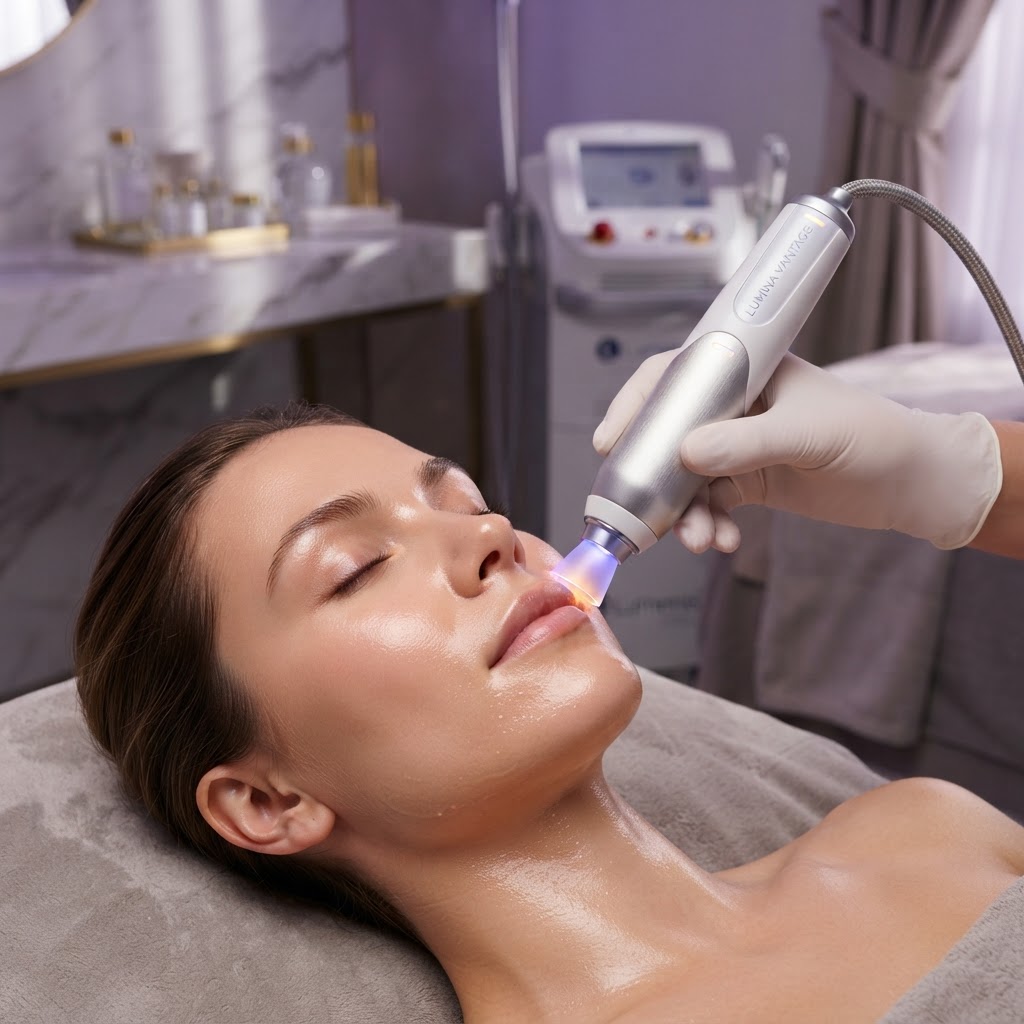
Misconception 1: 'CO2 Laser Resurfacing Is Intolerably Painful'
One of the most pervasive myths stems from early 1990s fully ablative laser technology, which delivered intense continuous heat across the entire skin surface without modern cooling or fractional scanning. Today's fractional CO2 laser technology represents a dramatic leap in patient comfort and safety. Modern computerized scanners deliver high-peak-power energy in microscopic pulse durations, allowing target tissue to cool between micro-spots. Furthermore, pre-treatment application of compounding-strength topical anesthetic gels (lidocaine/tetracaine) for 45 to 60 minutes effectively numbs dermal pain receptors. During the procedure, continuous cold forced-air chilling (Zimmer cooler) neutralizes thermal sensations. Most patients describe the treatment feeling like a moderate tingling or prickly warmth rather than severe pain. The clinical team at Din Style Aesthetics in Miami Lakes continually monitors patient comfort and adjusts the approach throughout the session. While the procedure is not sensation-free, describing it as intolerably painful reflects outdated technology rather than modern fractional systems, and most patients find the experience manageable with the comfort measures now standard in contemporary practice.
Misconception 2: 'CO2 Laser Thins the Skin Over Time'
Biological reality is precisely the opposite of this common fear. While the laser micro-ablates a microscopic percentage of damaged surface epidermal cells during treatment, the underlying thermal energy delivered into the reticular dermis triggers intense fibroblast proliferation and neocollagenesis. Histological tissue studies demonstrate that following fractional CO2 laser resurfacing, both the epidermal layer and the dermal extracellular matrix exhibit measurable increases in thickness, cellular density, and organized collagen fiber alignment over the subsequent 6 months. Rather than thinning the skin, fractional CO2 laser resurfacing structurally thickens and reinforces aging, sun-damaged dermal tissue. The confusion likely arises from conflating ablative resurfacing with older over-aggressive treatments that did compromise the skin barrier. Modern fractional devices are designed to preserve untreated bridges of skin between micro-columns precisely so that the dermis remodels and thickens rather than thins. Patients concerned about long-term skin quality should discuss this evidence with their provider during the consultation, as the documented biology is reassuring for appropriate candidates.
Misconception 3: 'Non-Ablative Energy Devices Produce Identical Results to CO2 Laser'
While non-ablative platforms (such as Stellar M22 IPL, RF microneedling, or Sofwave ultrasound) are excellent tools for targeted tone correction or subdermal lifting, they operate on fundamental biophysical principles different from micro-ablative CO2 lasers. Non-ablative modalities heat tissue beneath intact skin without removing damaged surface cells. Consequently, while they offer minimal or zero downtime, they cannot physically level raised scar borders, ablate deep actinic keratoses, or resurface severe perioral lip rhytids in the manner that fractional CO2 ablation accomplishes in a single session. Each technology serves a distinct clinical purpose, and understanding these differences prevents misaligned expectations. A patient seeking surface refinement and scar leveling will be better served by CO2 resurfacing, while a patient whose primary concern is lifting sagging tissue will be better served by an ultrasound or muscle-stimulation platform. The consultation is where these distinctions are applied to the individual patient's anatomy so that the chosen technology matches the actual concern rather than the patient's initial assumption about which device is most powerful.
Essential Questions to Ask During Your CO2 Laser Consultation
To ensure you receive safe, expert care, we encourage every prospective patient to ask these key diagnostic questions during their consultation: 1. 'Is my current skin phototype and tanning status appropriate for fractional CO2 ablation?' 2. 'What specific laser energy parameters (density, mJ per spot, pulse duration) do you recommend for my unique anatomical concerns?' 3. 'Will I require pre-treatment skin conditioning, hydroquinone melanocyte suppression, or prophylactic antiviral medication?' 4. 'What exact post-laser skincare products and barrier ointments will be provided in my aftercare protocol?' 5. 'How does fractional CO2 laser resurfacing compare to alternative options like Sofwave, TriLift, or injectables for my specific goals?' At Din Style Aesthetics in Miami Lakes, your clinician thoroughly answers each question, providing clear personalized rationale. Patients should also ask about the expected timeline for visible improvement, the number of sessions likely required, and the total investment before committing. A well-informed patient participates more meaningfully in their own care and tends to be more satisfied with the outcome, since their expectations were shaped by the consultation rather than by online content.
Making an Informed Decision at Din Style Aesthetics in Miami Lakes
An informed aesthetic decision balances clinical evidence, individual anatomical needs, recovery tolerance, and professional expertise. At Din Style Aesthetics, located at 5803 NW 151st St Unit 200 B in Miami Lakes, FL, our approach centers on individualized patient evaluation rather than generic treatment packages. We examine your facial architecture, discuss your lifestyle expectations, review all potential treatment modalities, and provide transparent pricing before any procedure is scheduled. To begin your personalized aesthetic conversation, contact our Miami Lakes team at (305) 799-6313 or submit a consultation request through our online booking portal. The goal of the consultation is not to sell a particular procedure but to identify the right procedure for the patient's actual concerns, anatomy, and lifestyle. Patients who approach the consultation with curiosity and a willingness to share their full history and goals tend to leave with a plan that genuinely fits them, which is the foundation of both safety and satisfaction in aesthetic medicine.
Who Should Review This Pre-Treatment Checklist?
Any patient actively researching options for deep textural skin renewal, facial rhytid reduction, or post-acne scar correction will benefit from reviewing this guide. Whether you are considering fractional CO2 laser resurfacing for the first time or comparing it against alternative platforms like Sofwave, TriLift, or Stellar M22 IPL, understanding the physical realities of treatment ensures an empowering consultation experience at our Miami Lakes facility. Patients who arrive informed tend to ask better questions, understand the tradeoffs of each option more clearly, and leave the consultation with a more accurate mental model of what their recovery and result will actually involve. The objective of this guide is not to steer any patient toward a particular treatment but to ensure that the decision is grounded in accurate information about how each technology actually works and what it can realistically accomplish.
Navigating Treatment Expectations Wisely
Patients seeking immediate instant results without any post-procedure healing window, or those expecting non-surgical laser resurfacing to replicate the anatomical repositioning of a surgical facelift, should discuss alternative approaches with their clinician. Setting realistic expectations regarding collagen remodeling timelines ensures genuine long-term satisfaction. A consultation is the appropriate place to reconcile the patient's goals with what each technology can actually deliver; a patient whose expectations are out of step with the physical realities of the treatment is more likely to be disappointed regardless of how well the procedure itself is performed. Honest expectation-setting is a clinical responsibility, and patients should feel comfortable raising their hopes and concerns openly so that the plan can be adjusted to match achievable outcomes.
Frequently Asked Questions
Can fractional CO2 laser resurfacing cause permanent scarring?
When performed by trained clinicians using appropriate energy parameters and followed by diligent post-laser aftercare (avoiding picking desquamating skin and protecting against sun exposure), the risk of scarring is extremely low.
At what age should someone consider CO2 laser resurfacing?
There is no fixed chronological age limit. Young adults seeking correction for pitted post-acne scars, as well as mature adults addressing deep solar rhytids and elastosis, can be suitable candidates based on individual skin architecture.
Why is an in-person consultation required before CO2 laser resurfacing?
An in-person evaluation allows your clinician to assess skin thickness, baseline melanin activity, active tissue health, and underlying facial architecture to calculate custom laser parameters and prescribe necessary pre-treatment conditioning.
How do I schedule a pre-treatment evaluation for CO2 laser in Miami Lakes?
You can schedule your private consultation by calling Din Style Aesthetics at (305) 799-6313 or visiting our appointment request page online.
Sources and Medical Information
This article is educational and does not replace an individualized medical consultation at our Miami Lakes clinic.
Begin Your Consultation at Din Style
We offer personalized evaluations for every treatment at our Miami Lakes, Florida clinic. Speak with our team today.
Request a Consultation
Personalized evaluation with our treating providers in Miami Lakes.